trans activist janet mock gives keynote at LGBTQ youth empowerment conference


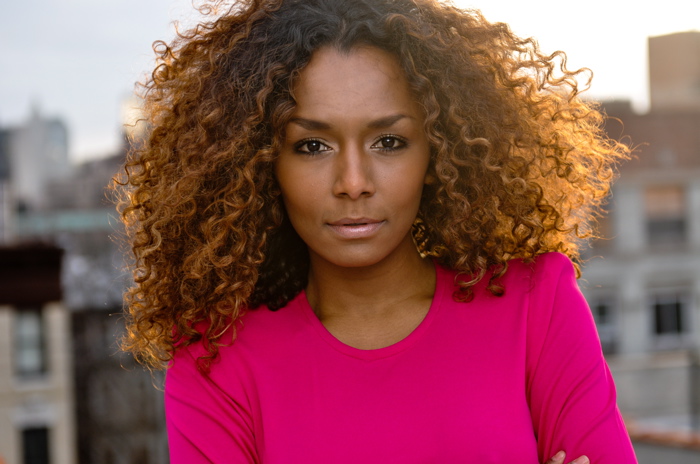
Janet Mock, People.com Staff Editor and nationally renowned transgender activist, will give the keynote address at the Hispanic Black Gay Coalition's 2012 LGBTQ Youth Empowerment Conference. The free conference, which takes place Saturday, Oct. 20, 2012, from 10 a.m. to 5 p.m., educates and inspires LGBTQ youth of color under the age of 25 to use their ideas, knowledge, and skills so that they can create personal and social change.

Mock, a transgender woman of color, uses media as a platform to explore and challenge "society's limited portrait of womanhood." Her #GirlsLikeUs campaign empowers trans women to speak up and out about their experiences and lives.

With school back in session, the LGBTQ Youth Empowerment Conference is an important opportunity to create dialogue about what it takes to help LGBTQ youth of color be informed and aware of resources, make healthy and safe decisions about the way they live their lives, and feel supported by the greater community.

According to the Gay, Lesbian and Straight Education Network's 2009 report "Shared Differences: The Experiences of Lesbian, Gay, Bisexual and Transgender Students of Color in Our Nation's Schools," across all non-white racial and ethnic groups, sexual orientation and gender expression were the most common reasons LGBT students of color reported feeling unsafe in school. The report also highlights how verbal harassment, physical violence, and/or discrimination because of sexual orientation, gender expression, and/or race/ethnicity often have more negative effects on the classroom performance and overall attendance of LGBTQ youth of color than their white counterparts.

As a transgender woman of color, Mock understands and empathizes with the struggles LGBTQ-identified youth experience. "In my freshman year of high school, I began transitioning from Charles to Janet. So I had a choice to make. I could pretend to be something I was not, butch up and blend in with the crowd, or I could fight the hardest fight there is: stick out and live my truth and be my authentic self. I chose the latter."

To live authentically, fully incorporate themselves into society, and be personally and professionally successful, LGBTQ youth of color need culturally competent programs and services, peer and adult support, and safe spaces to connect with information, resources, and relationships that improve their livelihood. With the support of her mother, peers, and tolerant teachers, Mock transcended the obstacles of transitioning as a teen and says her decision to come out and advocate for equality and inclusion for LGBTQ-identified individuals came from a recognition of a need for more positive role models for LGBTQ youth, something she lacked as a youth.

"I know that it's so much more than me, so much more than my story, so much more than trying to gain recognition for my journey," Mock insists. "It's about kids just like me, kids who are still fighting the good fight every day to just be who they are, no matter how different they may seem from their peers. They are the real heroes, and these courageous kids deserve a shining example who can help lighten their load by merely existing and being an inspiration," she says.

In its second year, HBGC's LGBTQ Youth Empowerment Conference presents a unique opportunity for teens and young adults to come together to discuss identity, orientation, healthy relationships, and coming out; use art and self-expression as activism; develop strategies to lead peers in advocating for rights and resources for LGBTQ and other marginalized communities; learn ways to take care of themselves in mind, body, and soul; and much more. Conference tracks include Social Justice, Health and Wellness, Arts, Advocacy, and Life Skills.

This year's conference takes place on the campus of the Massachusetts Institute of Technology (MIT) in Cambridge, Mass. Entertainment will be provided by multi-generational Asian women's performance troupe Genki Spark. Youth can also gather information about programs, services, businesses, and organizations that serve LGBTQ youth and youth of color at the conference's resource fair.

The 2012 LGBTQ Youth Empowerment Conference is sponsored by the Haymarket People's Fund, the Hyams Foundation, Greater Boston PFLAG, Boston GLASS at JRI Health, BAGLY, and the Unitarian Universalist Social Just Fund.

published in Bay Windows and on HuffingtonPost.com
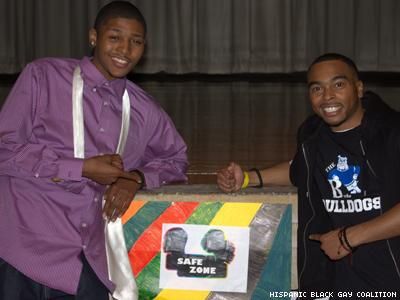
why black and hispanic kids needs GSAs

At my previous high school, I met a fellow student who I eventually grew to be close friends with. All through my first two years of knowing him, he was a real macho "I want every girl" type of guy.

Then one day we were chilling and joking around at his house with the rest of our friends.
He reacted to our jokes differently than he usually did. He giggled and used body language that had more emotional freedom and enthusiasm than he had ever expressed before. Our friends started teasing him, calling him “fag” and saying “That was so gay” and “OK, RuPaul!” He snapped back inside his macho shell with a look of disgust and offense on his face.

He stayed silent for a while, then got up and walked to the bathroom. Our friends continued to tease him, saying “Aw, girl, you’ll be OK!” but I told them to chill because I could tell by his reaction that this was no time to joke.

I followed him to the bathroom. and before I knocked on the door, I heard soft sniffling and angry mumbling. I opened the door and saw him staring into the mirror, with tears running down his face and hitting the sink. I assumed then that he secretly identified as gay but had never felt comfortable expressing himself.

When we went back to join our friends, he told us that he was gay, and we asked him questions to learn more about how he had been feeling, what he had experienced, and how we could be supportive.

The following school year, my friend dropped his macho shell, and I noticed him interacting with people more. He knew he didn’t have to pretend to be something he’s not, and everyone loves him just the same as we did before he told us he’s gay. For taking a step like that, I give him much respect.

My friend’s story is a good example of why schools need gay-straight alliances. GSAs help students become more comfortable with talking about and expressing who they are, especially when it comes to expressing their sexuality or gender.

Even though we’re called the Gay-Straight Alliance, anyone can join, and our events are for the entire community to enjoy. The GSA helps to bring our school community together. We host talent and fashion shows and dances and balls to invite students, teachers, and administrators to relax, interact with each other, have fun, be productive, and avoid getting in trouble during our out-of-school time.

One of the most important parts of any community is acceptance, and that’s what the GSA is all about. Our events show that whether you’re gay, straight, bisexual, transgender, queer, or questioning, there is a space in our school where you can be yourself.

That’s why I joined the Burke’s GSA, to help my peers understand that they can express who they are and what they feel while at school, and that it will be accepted and respected. I hope my participation in the GSA will help me gain friends, knowledge, and responsibility and help students and teachers at the Burke know that there is a place at our school where we explore, appreciate and celebrate differences.

C. JACOBS is a student at Jeremiah E. Burke High School in Boston and president of the school’s Gay-Straight Alliance. The Hispanic Black Gay Coalition is a Boston-based grassroots organization committed to improving the livelihood of LGBTQ people of color through activism, education, and counseling. HBGC is responsible for spearheading the establishment of the Burke High School GSA. Learn more at www.hbgc-boston.org.

published on Advocate.com

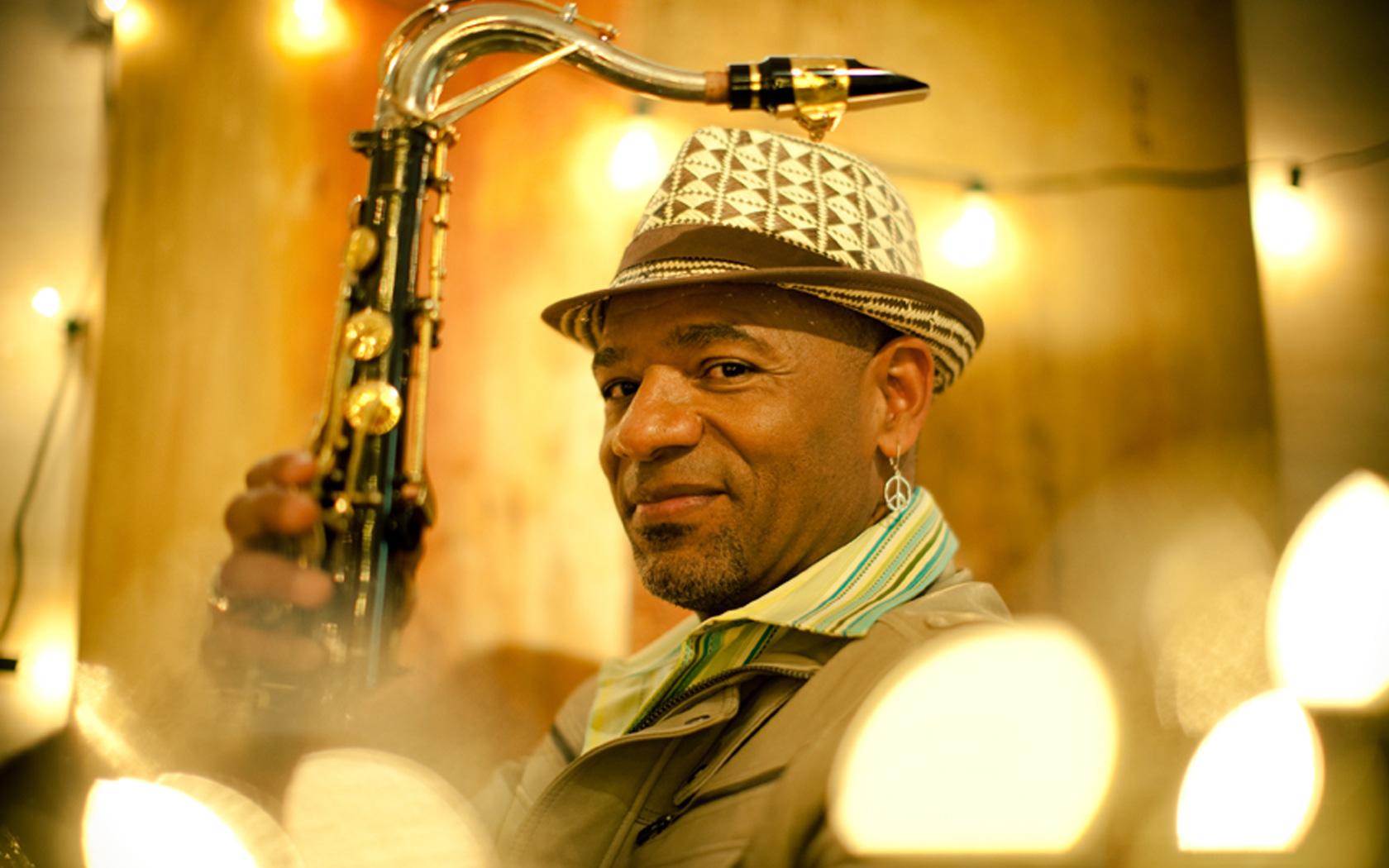
saxophonist ministers through music at SCPSCC’s “The Gospel According to Jazz”

Saxophonist Kirk Whalum ministers through music at SCPSCC’s “The Gospel According to Jazz”

HARRISBURG, PA (September 2015) -- On Friday, September 23rd, Grammy® Award winning saxophonist Kirk Whalum will bring his smooth and spirited musical stylings to the South Central PA Sickle Cell Council’s fundraiser “The Gospel According to Jazz.”

The event, which takes place at 7PM at Christian Life Assembly in Camp Hill, PA, takes its name from Whalum’s popular The Gospel According to Jazz album series, where the Memphis, Tennessee native puts his own twist on both traditional and contemporary gospel tunes. One of the forefathers of the emerging ‘gospel jazz’ genre, Whalum, who’s also an ordained minister, uses his music to inspire listeners to believe and achieve.

Throughout a career that’s spanned more than two decades, Whalum’s musical ministry has wowed fans, fellow musicians and critics alike. Before setting out on a solo career, Whalum was a session player for some of the world’s most revered musicians, including Quincy Jones, Barbra Streisand, and Whitney Houston, for whom he performed the sax solo on her mega-hit “I Will Always Love You.” Since then, he’s sold hundreds of thousands of albums; performed on stages throughout the world; and received an array of accolades, including three Dove Award nominations, two Stellar Awards and 11 Grammy® nominations. This year, he won a Grammy® Award for Best Gospel Song for “It’s What I Do,” his duet with singer Lalah Hathaway.

Ben Tankard, a self-taught multi-instrumentalist who’s often touted as the godfather of gospel jazz, will join Whalum at the event. Tankard is the best-selling gospel jazz musician of all time.

Tankard, who began making music after an injury prevented him from entering the NBA, is also pastor of Destiny Center Church and president of Tribute Records and Films. He’s earned several Stellar, Dove and Grammy awards and nominations, and his instrumental recordings, including Song of Solomon, Piano Prophet, and his latest album Mercy, Mercy, Mercy, are enjoyed by millions across the globe.

“The Gospel According to Jazz” gives the South Central PA Sickle Cell Council (SCPSCC) a unique opportunity to harness Whalum and Tankard’s star power to raise money to support the organization’s work to raise awareness about sickle-cell disease.

Sickle cell disease (SCD) is an inherited blood disorder where red blood cells become crescent, or ‘sickle’, shaped. The odd shape makes it difficult for the malformed cells to move through blood vessels. Sickle cell disease often leads to long-term medical conditions such as anemia, organ damage, pain episodes, and stroke and makes some patients more vulnerable to certain bacterial infections. According to the Center for Disease Control, 1 in 500 African-Americans are born with sickle-cell disease, and as many as 1 in 12 African-Americans carry the sickle-cell trait.

SCPSCC was founded in 1994 by eight local physicians concerned about the lack of knowledge, resources and skills available to meet the multi-faceted needs of sickle-cell disease patients. They formed the council to educate the public about the disease, assist patients and practitioners with managing the disease through intervention, counseling and support groups, and advocate for increased funding and research.

Tickets are $49 per person; to reserve your seat, call 800.595.4TIX FREE (4849) or visit the SCPSCC’s website at www.scpascc.org. For more information about the SCPSCC, visit their website or call 717.234.3358.

gifted lyricists bring seasons greetings


GIFTED LYRICISTS BRING SEASONS GREETINGS AT LYRIC JONES' BOOM BAP HOLIDAY
Final Motivate Monday showcase of 2014 celebrates some of the best in Boston hip hop


BOSTON, MA — (December 2014) Bring the year to a close with beats, bass and some of Boston's best emcees at Lyric Jones's Boom Bap Holiday, a special edition of Authentic Lifestyle's weekly Motivate Monday urban music showcase.

Legendary Hub hip hopper Akrobatik and Lawrence spitfire Termanology headline as hosts Jones and Boston emcee/producer Mark Merren offer up the perfect post-holiday, pre-New Year present — an evening of performances by ill lyricists with the gift of gab.

Cali emcees Planet Asia & Tristate (General Monks of Durag Dynasty) make an appearance on the East Coast bringing rugged flows and decades of experience and acclaim among indie underground rap fans. Jones, home for the holidays after moving to LA to propel her musical craft and career forward, offers up her signature brand of b-girl bravado and soulful, jazzy melodies, while M-Dot comes through with the cerebral rhymes that have earned him a solid fan base both stateside and overseas.

Lyric Jones's Boom Bap Holiday takes place Monday, December 29 at Church Boston, 69 Kilmarnock Street, Boston. Doors open at 8 PM and the show starts at 9:30 PM. This is a 21+ event with a $10 cover.

This year, Motivate Monday celebrated its third year of being a staple on the local urban entertainment scene, with the showcase taking place at a number of venues throughout the city, including Midway Cafe, Wonder Bar, and Church Boston. Motivate continues to be one of the few regular performance event series that gives local artists and audiences the opportunity to connect over good music in a cool and comfortable atmosphere.

In 2015, Authentic Lifestyle will continue to bring Bostonians who love the culture the realest, most original artistic expressions the 617 has to offer, hosting weekly showcases and featuring up-and-coming artists from outside the state, an approach the entertainment company first experminted with this past November during a Motivate Monday that featured NYC rapper Mickey Factz.

For more information about Authentic Lifestyle and Motivate Mondays, visit https://www.facebook.com/BrandedAuthenticHipHop. See images and footage from Authentic Lifestyle events on Instagram @authenticmerren.

—30—

afrodesiacity: the (r)evolution of soul


AfroDesiaCity is more than just an event planning company — it's a movement.

Though Boston has birthed some of urban music's biggest stars, including Donna Summer, Guru and New Edition, there are still few spaces in the city where young professionals of color can mix and mingle while enjoying the smooth and sexy, fierce and funky, joyful and jazzy sounds of classic and contemporary soul music.

That's where we come in.

AfroDesiaCity curates and coordinates live music events, social gatherings and celebrations infused with an intelligent, innovative and irreverent sense of soul.

As we lead the renaissance of soulful entertainment in Boston, we're setting the stage for the city to step into the spotlight as one of the nation's premiere urban music metropolises.

Since 2009, AfroDesiaCity has been bringing audiences the best in emerging and established musical talent thanks to our fine ear for cutting-edge soul sounds and our deep connections with local and national music and entertainment industry professionals and institutions, including the world-renown Berklee College of Music.

Our annual Soulful Bliss celebration features independent, underground musicians putting their unique stamp on soul music, while our monthly Futuristic Soul showcase has quickly become a breeding ground for emerging soul and urban music artists to display their talent and network with industry insiders to propel their careers forward.

We've worked with a number of today's most notable leaders of the new school of soul, including Jesse Boykins III, Shea Rose, Theo Martin, Gwen Bunn, April Stanford, Iman Omari, Elevation Theory, Vaughn Anthony and many more.

As we continue to introduce Boston to up-and-coming independent underground artists, we're also positioning ourselves to become the prime platform for national and international soul music veterans seeking to share their musical message with live entertainment enthusiasts throughout Greater Boston. With each event we plan and host, we're working to expand the market so that soul music artists feel confident that they can connect with their fans here in the Hub.

Our commitment to bringing good people together to have a great time extends beyond live music events to include private parties and receptions, cultural functions and public festivities. From our SoulStage at the City of Boston's annual GreenFest to wine tastings where folks can socialize and imbibe in a relaxed, intimate setting, AfroDesiaCity plans and promotes unparalleled experiences that speak to the heart and soul of those who take part.

We're dedicated to sharing with our community the beauty and power of living soulfully, and we do so not only with our entertainment events and social gatherings, but with arts programs and workshops for youth as well. We hope to be an essential part of the effort to cultivate the next generation of soul stars by providing spaces in our community where young people can express themselves creatively, connect with one another and put some positive energy back into our city.

From electrifying performances and lively parties to community-based arts programs, AfroDesiaCity is leading the (r)evolution of soul.

using poetry & performance to transform pain to power

"I approach different creative works in different ways, but the core place I start is what is urgent in our world? What is really needed?" said Daniel Beaty, whose one man play "Emergency!" hits the Arts Emerson's Cutler Majestic Theater this weekend.

What was urgent with "Emergency!", a production in which the award winning actor, poet, singer and storyteller plays forty-some characters who react to the mysterious appearance of a slave ship at the Stature of Liberty, was Beaty's sense that "so many people feel bound."

"Why do so many people feel not happy in their lives, not free? What's the root of that, and what story do we tell ourselves about ourselves so that we can feel free to create the lives of our dreams both for ourselves and for our children?" he wondered.

"All these characters in "Emergency!", they're fighting to be free," Beaty explained. "Free from past pain, free to make their dreams happen, free to make their relationships work, free to be joyous."

"I care about are the state of the African American community and places where we're disenfranchised or certain parts of our community are without hope," Beaty said. "I focus on [how] we can tell the story of our overcoming and our brilliance so that we can be reminded of the truth of who we are as we face challenges such as issues around fatherhood, incarceration, education [and] poverty. People are struggling to get by, to pay their bills, to make their lives and their relationships and their families work. I try to create experiences that ultimately cause us to feel we can keep going. "

Here, he talks about what provoked him to become a performer, the ways the performing arts can help transform pain to power, and the importance of supporting black theater.

When did you know you wanted to be a performer? 
I grew up in an environment that had a lot of addiction and incarceration. My father was arrested 58 times -- [he was a] heroin dealer and addict. I had an older brother who battled with addiction to crack cocaine, and sometimes, he would get violent. I would run across the street to the church and wait until my mother got home from work. One time, I was standing in the church parking lot about to enter, and something stopped me in my tracks. I saw myself as an adult: I was standing in front of a theater in front of thousands of people and I was on a stage. That experience caused me to know at an early age that though I [and] my family was in this place of a lot of pain, there was a greater purpose. From that point, even as a ten year old boy, I began to ask myself what is it I can give, what is it I can say that might mean something to people?

You've taught and continue to teach performing arts to youth and young adults through workshops and as an adjunct professor at Columbia University. What motivates you to share your gift and your skills with the next generation?

Finding a love of the arts gave me a safe place to heal and to find out who I was different from my father and brother. The arts is going to save a lot of our young people. The experience of young people participating in the arts gives them a healthy place to put their emotions, it gives them a way to express the things that they're going through. I really a make a commitment to doing work with young people because not everybody is going to find their place in athletics or traditional academics. 

You're publishing a children's picture book based on your poem "Knock Knock". How did that come about?

Sometimes we have experiences at a very early age that if we don't heal them, it impacts us all throughout our lives. In my work as a performer, I continually discover that people have experiences in childhood that really have an impact on their core self concept. The idea with the children's book is to speak to the issue of loss and abandonment by fathers that too many of our children experience at a young age in the hopes that the healing process can begin early so that they do not have to grow up living out of that pain.

It seems like healing and empowerment are the heart and soul of your work. How do you integrate those elements into your productions?

As I'm working, I always ask myself, "How can I make this entertaining?" People need to laugh, people need to jump to their feet. How do I talk about something that is about our healing but at the same time create an experience that's fun, that's passionate, that's enjoyable? So much of our entertainment, this "reality TV", speaks to the lowest parts of who we are, and it may be enjoyable, like candy is enjoyable, but if you eat too much candy, it's not good for you, and it doesn't have any nutrients. What I try to do with my creativity is create something delicious that's also nutritious.

Does the African American community engage enough with theater and the performing arts? As a black performer, do you see enough faces that look like yours when you're on stage?

I would love to see more of our people coming to the theater. At the same time, I think people are skeptical right? Theater sometimes don't do shows that speak to our experiences as a people, so people don't feel like their going to go there and experience something that they'll like. Sometimes the way some of the stories are told, they don't honor or tell the truth about who we are. But I think if somebody is telling stories that are really about the best of us, we have to do a better job of showing up to make sure those artists continue to have a platform. I believe we as a black community have the power to say this is the kind of story I want to hear, and we're going to call our friends, we're going to organize a group and we're going to show up and support these kinds of stories.

ArtsEmerson presents "Emergency!" featuring Daniel Beaty, Friday, March 22 through Sunday, March 24, Cutler Majestic Theatre, 219 Tremont Street, Boston. Tickets are $25 - $79; visit artsemerson.org for more information.

symposium explores black style, standards of beauty

Kinky and coily, or silky and bone-straight? That’s the topic of debate this Saturday at Facing Love VI, a talk show-style symposium that invites Boston’s black community to talk about issues that impact the relationship between men and women.

The symposium features panelists Darrius Peace, natural hair stylist and author of My Hair Aint Nappy, Jessyca Abena Marshall, LMSW and founder of Brooklyn-based Naturally Beautiful Hair Care and Nancy V. Brown Campbell, master hair stylist and owner of Newbury Street salon NV My Hair. The panelists will share their personal hair journeys, explore the ways relaxed and natural hair reflect trends in black style and discuss how black beauty standards affect women and men physically, mentally and emotionally.

How did Facing Love’s founders decide to delve into the world of perms, wigs, weaves, braids, afros and dreads? It started with a Facebook post.

After hosting the first Facing Love symposium in 2008 and holding dialogues nearly every year since, the gentlemen, led by Salih Rowe, 2nd Vice President of the Boston Society of Vulcans — a non-profit organization comprised of Black and Latino firefighters — decided to harness the power of social media to keep the conversation going between events.

They started a Facebook group page where they posted links to interesting and relevant articles, news and views. When a Facing Love co-founder posted a link to an article about possible connections between hair relaxers and fibroid tumors, Rowe knew they’d found the theme for their next symposium.

“My partner ... posted a link and asked the question: ‘Is it worth it?’ Is it worth it to perm your hair and open yourself up to the possibility of fibroid tumors gestating in your body for the look of the European?” he said.

“The post went bananas — there were more than 300 comments, and [the debate] went for a couple of days,” Rowe recalled.

Intrigued by the multi-layered subject he describes as “the onion that is Black hair,” Rowe and his fellow organizers dubbed this year’s symposium “Black Hair: The Natural Debate” with the intent of exploring how black beauty and style can affect how black people think about and interact with each other.

But when it comes to talking about black hair, Rowe recognizes that many women will wonder what love — or black men — have to do with it.

“There are sisters asking me ‘Why do you care?’ They view it as us trying to get into black women’s business in order to control or influence negatively. And that’s why we’re doing Facing Love at all, to change that perception that black women have of many black men that our interaction with [them] is nefarious by nature,” Rowe said.

“We want to say, ‘No sisters, we’re involved in this because we care about you; whatever affects you affects us. We’re your brothers and we love y’all and we want what’s best for y’all, and this is how we’re going about doing it,” he added. “We knew that the relationship between black men and black women was never going to get better until we dropped the pretenses and talked as if neither one of us was there.”

When Rowe came up with the concept for Facing Love back in 2008, he knew that the event would have to feature topics provocative enough to spark people’s interest and a dialogue deep enough to get folks fired up.

“With black folks, you have to agitate them a little bit to get them to be involved in anything,” Rowe said. “We want peace and we’re very apathetic people at times, so we have to needle you in some areas to get you to want to come.”

Engaging the audience in challenging yet meaningful conversation has been the key to making Facing Love different than the typical community forum.

“We see it all the time — organizations have these think tanks and conferences where you go, they introduce a keynote speaker, everyone claps and it’s dry as hell,” said Rowe. “Facing Love is different in that we want to engage the attendees, because their input is just as valuable as those people that we want to put up on pedestals and onstage because they have positions and degrees. It adds another element of excitement and energy that I just haven’t seen before.”

Adding to the excitement of this year’s event is a performance by husband and wife R&B duo Kindred the Family Soul, who Rowe said represent the resiliency, respect and romance of a black man and woman in love. Their latest album “Love Has No Recession” features upbeat, grown-folk grooves like “You Got Love” featuring rapper Snoop Dogg, sensual bedroom ballads like “Magic Happen” and thoughtful political sendups like “Take A Look Around.”
Rowe said the couple’s music inspired him to keep looking for the love of his life, despite the sometimes difficult interactions he has with black women, and to continue to focus on rebuilding “the basic unit of black civilization: the black family.”

“Their music made me start to believe that it was possible that I could find someone that I could share my experiences and my life with,” he said. “I was really about to accept the fact that I was just going to be single for the rest of my life.”

Facing Love VI, featuring Kindred the Family Soul, takes place Saturday, March 9 from 1 to 7 p.m. at Hibernian Hall, 184 Dudley St, Roxbury. Tickets are $40; visit FacingLove.com for more information.

published in The Bay State Banner

Film shows cost of America’s drug war in dollars and lives

When filmmaker Eugene Jarecki decided to delve into the murky waters of America’s drug war in 2008, he started close to home.

He interviewed Nanny Jenner, a black woman his family had employed as a housekeeper for most of Jarecki’s young life. While it’s clear that Jarecki has a deep appreciation for how Jenner helped to raise him, he also acknowledges that Jenner’s need to work for his family ultimately led to the disintegration of her own.

Sadness stretches across Jenner’s face as she reflects on how her decision to move to New York with Jarecki’s family — a move made to earn more money to support her children — ultimately drove her son James to begin using drugs; he died in the late ‘80s after contracting AIDS following years spent injecting heroin.

Jenner’s story is just one of several searing accounts in Jarecki’s film, “The House I Live In,” a Sundance Film Festival Grand Jury Prize winner that takes both a critical and compassionate look at how the war on drugs has impacted everyday Americans.

Through brutally honest and heartfelt portraits of people involved in and impacted by the drug war, Jarecki makes a strong case that the war on drugs has never really been about drugs, but is, in fact, a war on all Americans, a capitalist chess game benefiting a small group of the powerful elite.

Expert interviews from the likes of “The New Jim Crow” author Michelle Alexander; David Simon, author, journalist and creator of the critically acclaimed HBO series “The Wire,” and Harvard Law professor Charles Ogletree offer important context for why and how America’s drug war has been sustained. But it’s the personal narratives by convicted drug dealers, former drug abusers and their loved ones, and law enforcement and criminal justice officials that give the film its color, painting a more vivid picture of how socio-economic conditions push people to seek drugs as a form of refuge or revenue.

As Anthony Johnson’s girlfriend, Alicia Alcindor, sits stoically in a New York City apartment, their infant daughter sleeping soundly on her chest, tears suddenly spring from her eyes as she realizes that it could be years — decades even — before she and her daughter see Johnson again. Johnson is in jail pending trial on drug possession charges after being arrested in Vermont allegedly brokering a drug deal, and sees clearly the pattern that’s emerging: He grew up without his father, who spent years imprisoned on drug charges, and the chances that his younger daughter will do the same are extremely high.


Meanwhile, Johnson’s father, Dennis Whidbee, a convicted drug dealer and former drug abuser who now lives in Florida, is driven to tears as he comes to terms with the fact that his son has followed in his footsteps. Whidbee recalls the sense of desperation he felt when he discovered he would be a father. How would he provide for his sons? Drug dealing was the easy answer, but the pressure and risks of a life spent serving on corners eventually drove Whidbee to start using himself.

Since its inception, America’s drug war has proven to be a neverending battle that has cost the country millions — in both dollars and lives. Since President Richard Nixon set off the war on drugs more than 30 years ago by declaring drugs America’s “public enemy number one,” the United States has spent at least $1 trillion on the drug war, with more than 45 million Americans imprisoned for drug-related crimes. And yet, the rate of drug abuse and drug sales has yet to decrease.

“The House I Live In” pinpoints several reasons why the war on drugs has failed: Demand for drugs remains high because people still look to substances to numb the pain of living in poverty and oppression; communities of color have for centuries been disenfranchised from economic opportunities and driven to “underground economies” like drug dealing just to survive; and the war on drugs is simply big business — with everyone from local police departments and elected officials to owners of privatized, for-profit prisons making money from the arrest and imprisonment of those caught using or dealing drugs.

As the film points out, every war starts with propaganda, and the war on drugs has been no different. Decades-old clips from PSAs and sound bites of politicians promising to scrub away the scourge of drugs show America’s long history of shaping citizens’ perceptions about who uses and sells drugs.

Particularly elucidating is Jarecki’s interview with investigative reporter Charles Bowden, who pointed out that historically, America’s drug laws materialized out of a need to alleviate fear among whites that people of color had too much access to economic opportunities like jobs and housing. Drug policy became a form of racial control, a way to target immigrant groups that were threatening the white economy and criminalize their behavior. Those arrested and imprisoned as a result of discriminatory drug laws are, as one expert put it, “paying for our fear, not for their crimes.”

Unfortunately, it’s not just everyday Americans who have come to believe the hype about people of color being the primary culprits in the drug war. Jarecki also reveals the ways racial myths and stereotypes often lead law enforcement and criminal justice officials to arrest, detain and imprison people of color — particularly black people — at higher rates than whites, who abuse drugs at higher rates than people of color: While a mere 13% of all crack users are black, 90% of defendants in criminal cases involving crack are black.

What’s worse, the propaganda of prejudice and discrimination at the root of the drug war has manifested in bad policing and unjust court proceedings that have created an irreparable rift between law enforcement and criminal justice officials and the communities they are sworn to protect and serve. In the film, a Providence, R.I. police officer laughs as his partner proposes that poor women of color be sterilized so they don’t give birth to children that cops will eventually end up arresting. On the other side of the country, the sheriff of a small town miles from the Mexican border shrugs as he admits that in his hunt for drug traffickers, he profiles — probably unfairly — the people driving to and from Mexico, and goes so far as to suggest that all law enforcement officials do the same. Add to these attitudes the fact that drug arrests are often highly incentivized in many police departments, and it becomes clear why many law enforcement officials pursue drug crimes more aggressively than they do other crime and public safety issues.

Especially interesting is the film’s look at how the drug war has fueled the race to build and fill more privatized, for-profit prisons throughout America, and more specifically, the way mandatory minimum sentencing has made it easy to incarcerate millions of men and women for years on end, often the majority of their lives. Maurice Haltiwanger, whose story is highlighted in the documentary, is a prime example.

Arrested for drug possession, Haltiwanger goes before Judge Mark Bennett to receive his sentence. Though Bennett is known for delivering lighter sentences, his hands are tied when it comes to Haltiwanger’s case — even though Haltiwanger has taken a plea bargain, mandatory minimum sentencing laws state that he still must serve a minimum of 20 years in prison.

Michelle Alexander reveals that there are now more Black people imprisoned in American correctional facilities than there were Africans enslaved in the 1800s, a clear indication that the war on drugs is increasing the bottom line for those with a financial stake in the criminal justice system. And yet, the increase in imprisonment has only led to more poverty and crime, as those released from prison typically find themselves homeless, jobless and lacking the education, skills or support system to access resources or opportunities.

The “House I Live In” doesn’t go so far as to offer viable solutions to ending the drug war, decreasing the prison population, or restoring the lives and communities destroyed by the war on drugs. It does, however, make a compelling case that a pointless and ineffective campaign has fattened the pockets of a few, but has ultimately led America into a moral bankruptcy from which it won’t easily rebound.


SIDEBAR -- Ogletree: We must find another way

Harvard Law School professor and Civil Rights attorney Charles Ogletree, who’s featured in “The House I Live In,” has been a steady and staunch opponent of the war on drugs for more than 20 years. Here, he talks with the Banner about why the drug war has failed, why he continues to advocate for drug law reform, and how the film can help transform how we think about and deal with drugs in America.

When did the war on drugs first appear on your radar, and why have you strongly opposed drug war policy?

It really hit me in the ‘80s when I left Harvard Law School and went to Washington, D.C., to work as a public defender. There we had a lot of individuals who were charged with drug offenses, and there were mandatory minimums, there were people being punished for things that, to me, were incredibly unreasonable and unjust. Congress, which was led by Republicans and President Ronald Reagan was in the office, started pushing for more penalties — they wanted to punish crack cocaine 100 times more severely as an offense than powder cocaine, and that meant they were punishing blacks who were using crack cocaine as opposed to whites, the majority of whom used powder cocaine. They were punishing a race, not just a crime.

And it struck me in a big way when I helped [write] a report, “The Sentencing Project”; what we publicized was that in the year 1989, there were, for the first time in the history of America, 1 million people in prison. [By 2000], a little more than a decade [later], the prison population had doubled. That to me became the stark evidence of the challenge we had to face. It was those experiences as a lawyer, as a public defender, as a law professor, as a community activist, as a Civil Rights lawyer that made me realize that what we were doing was wrongheaded and we had to find another way to do it.

Now that President Obama has been re-elected, what role do you see his administration playing in ending the war on drugs?

[The Obama Administration] understands it’s a problem, and they understand that the approaches and tactics used 20 years ago, five years ago just haven’t worked — they’ve been abysmal failures. And as a result of that, they are the ones that convinced Congress to reduce the penalty for the disparity between crack cocaine and powder cocaine from 100 to 1 to 18 to 1. That’s a major change in the right direction. I’m hoping that with the restraints removed as far as politics, the president can do some positive things. And I suspect if they haven’t seen it, that the drug czar and the president and the attorney general will watch “The House I Live In” as a reminder of how things got out of hand, out of control, and that the goal now is to try to find a way to resolve it.

Published in The Bay State Banner

healing through headwraps

Fashion designer Imani McFarlane brings history, style, hope and culture to the community

“I’ve always felt an outfit is not complete until you top it off with a gorgeous headwrap,” says Imani McFarlane.

The headwrapping guru and fashion designer’s twisted, sometimes towering, cloth creations crown coifs with a touch of class and culture unmatched by a hat or hair clip.

The granddaughter of a master Jamaican seamstress, McFarlane is a single mother of three who took her first art classes, beginning at age 10, at the Elma Lewis School of Fine Arts. She studied fashion merchandising at Fisher College before starting her design studio, House of Tafari Collection, with $20, six yards of fabric and a vision to create clothing and accessories that celebrate African heritage and culture.

Her aesthetic honors her Afro-Caribbean ancestry, but she’s quick to point out that headwraps aren’t culturally specific: “Headwraps are worn in so many different countries for different reasons — in India, in Europe on the runway. It’s a fashionable accessory. And once people know how to create them, it becomes second nature, like putting on a t-shirt or a pair of jeans.”

 Read the rest online at Exhale Lifestyle Magazine.

“Endgame” shines spotlight on stigma, silence surrounding Black HIV/AIDS epidemic

For the first time in two decades, the United States will host this year's International AIDS Conference, to be held next week in the nation's capitol.

Despite having larger numbers of new cases of HIV/AIDS than countries with double its population and far less of its economic resources, America has seemingly turned a blind eye to an epidemic that's been crippling communities within many of the country's biggest cities for nearly a quarter century. 

But with the return of the International AIDS Conference to U.S. soil, it's also clear that Americans are realizing that they can no longer afford to look the other way when it comes to HIV/AIDS.

As government officials, medical professionals and activists attending the conference prepare to share knowledge and develop plans to deal with the epidemic both stateside and abroad, one local filmmaker is focusing her lens on the tremendous impact that the virus has had -- and is still having -- on America's Black community.

In her latest film “Endgame: AIDS in Black America”, Renata Simone shines a spotlight on the evolution of HIV within the African American community, presenting viewers with more than a dozen intimate interviews with men, women and youth who’ve contracted the disease; family and friends of HIV patients; medical professionals working to keep patients healthy and alive; activists working to raise awareness and encourage prevention; and high-profile figures like Magic Johnson and NAACP chairman Julian Bond who've influenced how Black people view and address the epidemic.

A media maker whose work has won her numerous accolades, including two Emmys and a Peabody Award, Simone has been covering HIV/AIDS since its earliest days. Her Peter Jennings-hosted television series "The AIDS Quarterly" and 2006 documentary film "The Age of AIDS," which looks at how the virus has manifested globally, were groundbreaking journalistic endeavors that brought viewers face-to-face with the depth and reality of the disease. "Endgame" continues Simone's exploration of the evolution of HIV/AIDS, making fluid and thoughtful transitions and connections between the varying elements that have created a health crisis of epidemic proportions within Black America.

Gay black men were among the first to contract the mysterious disease within the African American community; as “Endgame” reveals, cases of Black patients who'd contracted the virus were often under-reported or not reported at all. Such oversights effectively ushered in a culture of silence when it came to the Black community and HIV/AIDS.

Fear of the virus also manifested as backlash against homosexuality, and "Endgame" deftly examines how taboos and stigma around homosexuality -- and around sexuality in general -- has been widely propagated by the Black church.

Though the possibility of contracting HIV/AIDS is clearly no longer limited to gay men, as "Endgame" shows, in the Black community, myths about the disease developed decades earlier still prevail. And yet, both the film and recent reports and statistics clearly indicate that heterosexual African American women have quickly become the new face of the disease. One of every four new cases of HIV are contracted by women; two of every three of those women are Black. The most common form of contraction and transmission among Black women of all ages and socioeconomic status is heterosexual sex.

In a particularly poignant moment in the film, devout churchgoer and grandmother Nel talks about how she discovered she’d contracted the virus after finding her husband’s diagnosis in his bible. Though it’s been several years since she learned she is HIV positive, the long pauses and shakiness in her voice as she tells her story shows that she's still coming to terms with the idea that her partner – a deacon in their church – had kept quiet about something that is a matter of life or death.

“I think that that’s one of the big messages of the film,” Simone says. “It’s that secrets – especially in the case of HIV – can kill.”

On the eve of the premiere of "Endgame" on PBS's Frontline, I spoke with Simone about what Black America and society as a whole can learn about itself by delving into the dark past of the disease and illuminating the humanity of those impacted by the virus.

What got you interested in HIV and AIDS, and what’s held your interest in the topic? 

What initially attracted me to it was just how complex it is, and that here is a preventable disaster. When I first started covering it in ’85, it was complete hysteria – people not wanting to shake people’s hands, kids’ homes were being firebombed – it was really calamitous. And I thought that the injustice was something that I really could get interested in covering. We all have tragedies in our lives that are not preventable. Here’s something that’s terrible, but you could prevent it!

What do you think society has discovered about itself through its efforts to understand how the virus spreads, prevent transmission and develop a cure?

HIV is like a flashlight, and it illuminates persons that we wanted to keep hidden. At the cultural level, it shows who fell through the cracks. It shows the big consequences of policies that are made without a real understanding of how it’s going to affect people. And then all the way down to the personal level, it’s a flashlight that shows what happens when we keep secrets, what happens when we hold stigma, what happens when we keep silent. 

Like HIV and AIDS, race is still a taboo topic, even though it’s everywhere. Do you think that the election of a Black president meant that race could be discussed more openly, and that there could be more discussion about why HIV/AIDS has had such a devastating impact in Black American communities? 

The fact that [Obama] won the election, that meant that the majority of Americans believe that a Black man can hold the highest office not only in the country, but probably in the world, and that we better start paying attention. In that way, I think it’s an opportunity for healing and for a conversation to happen. The first step is this conversation.

I’m curious about your relationship to storytelling and the storytelling tradition in Black American culture and history. What role can storytelling play in starting to bring more awareness to HIV/AIDS? How do you think this film and giving people who are impacted by HIV/AIDS an opportunity to tell their story will start that conversation?

I went all over the country to interview people [for the film], and I said to them, ‘You may have noticed, but I’m white.’ And they say, ‘Yeah, but do you notice anybody else here who wants to listen?’ People hadn’t told their stories, and I have had so much feedback of people writing and calling and emailing and saying, ‘Just telling you my story changed my life. I was able to see myself in different terms and in a more cohesive way that made sense. I feel more secure in who I am because now my story makes sense.’ I was going to call this film “Testimony”, [to acknowledge] that notion of testimony and how powerful that is.

There was a piece of research that came by that changed my life. It said that nobody changes their behavior unless they have a first hand experience. If you do it really, really well, you can make people feel like they had a first hand experience through telling stories. You transport people through the story and make them feel like they experienced something, that they met someone they never would have the opportunity to meet in their own limited life. I wanted to use media to help people’s lives be better, and help them avoid this virus.

Published in The Bay State Banner

emerson alum flips the script on black film

Chicago-born, Boston-bred director Jae Williams is flipping the script.

A product of the hip hop generation, the Emerson College film school grad came of age in an era when the excitement of movies and visual media that explored new aspects of the black experience eventually gave way to exploitative portrayals of African American life and culture.

“Growing up in the late ’80s and ’90s, when “Boyz N the Hood” and “Higher Learning” and “Menace II Society” and all those films came out... [they] highlighted or glorified an athlete or drug dealer,” Williams says. “That was the only way to become successful — at least that was what was depicted in those movies. We kind of got used to that.”

Since then, young African American filmmakers like Williams have struggled to bring new visions of African American life to the silver screen and have their work accepted by audiences.

“It’s tough,” he says, noting last year’s brief war of words between critically-acclaimed director Spike Lee and the Christian-leaning, blockbuster media monolith Tyler Perry. “Sometimes, I feel that we get pigeonholed into one genre. It’s either a Spike Lee movie or a Tyler Perry movie.

“I think we’ve been conditioned to think that’s all Hollywood is going to accept; they’ve filled their quota,” Williams says. “It encourages a lot of young African American filmmakers to copycat what’s already been done, and it limits the creativity and the types of films that come out.”

But rather than simply depicting the depravities of black life or glossing over them altogether, Williams’ films rewrite those stories, using subtle yet powerful characters to examine how society cultivates the experiences that cause people of color to hurt.

“I want to be able to explore gritty urban issues without the violence, without [making] the stereotypical sexual, drug-related, gang-related film,” he explains. “Although there are elements of that in film and life, there are other avenues that you can take to [explore those elements].

“I want to create characters who have this urban, sort of ‘real’ lifestyle, but give them charisma, give them academic success, and not just [have them be] an athlete or drug dealer, things we normally see growing up, especially growing up in the past 20 years or so. I definitely want to go against the grain in doing that.”

 Williams seems to have no problem choosing the road less traveled, and picking and sticking to his own path has proven fruitful. His short film “Listen,” which was screened for the first time at this year’s Roxbury International Film Festival, earned him the Kay Bourne Emerging Filmmaker Award.
“Listen” puts viewers face-to-face with Saniya, a young mother suffering from post-partum depression.

Played out in a series of flashbacks, monologues and extreme close-ups, the film is unsettling even from its first scenes. As the camera zooms in on Saniya’s eyes and face, viewers get a glimpse into a tortured soul whose perception of her parents’ taboo interracial relationship has influenced her thoughts and behaviors.

When Saniya reveals the harrowing act of desperation that will change her life forever, the moral of the story, the point of it all, comes into focus — racism and broken homes push many people of color to seek refuge in reckless behavior.

“Listen” demonstrates Williams’ thoughtful approach to crafting message-oriented movies that are as attractive to the eye as they are stimulating to the mind.

“My favorite part of creating the visual is really finding an issue and creating a concept and sticking to it,” he says. “I’m forced to be creative.”

“On the surface, post-partum depression is boring and depressing in and of itself,” he adds. “I think that’s where the challenge is for me. How do I take this concept, how do I take this issue and create a story around it that’s going to be compelling enough to where someone’s going to pay attention and learn something from it?”

Like many filmmakers, Williams is convinced that seeing is believing: Watching things develop or unfold with images deepens our understanding.

“It’s in our nature to visualize,” he says. “Anytime anyone tells you a story, you always sort of picture it in your head how it actually went down. And that gives [the story] more substance and value.

“When you entertain through television or film or music, people tend to have a conversation about it,” he says. “When you’re discussing how you felt about a particular song or movie or TV show with your spouse or your co-worker, that’s really when the ideas begin to spread. That’s when you really begin to make an impact.”

As he moves forward with screening his newest short, “La Armonia” and producing a feature length film titled “Forever Ink,” developing dialogue both on and off the page and screen continues to be his mission and mantra.

 “If I can create conversation where someone feels comfortable talking about an issue such as post-partum depression or illiteracy, then I think that’s where I can leave my mark.”

published in The Bay State Banner

From accountant to AIDS activist

At the height of her career as an accountant for a major corporation, Kim Wilson was stricken with an unexplainable sickness that left her hospitalized for half a year.

Though she had had bouts with illness in the past that had knocked her down, they never took her out. She always managed to bounce back, regaining her health and moving forward with her personal and professional goals.

But not this time.

A Philly native, Wilson moved to Boston in her twenties to pursue a bachelor’s degree. She was working on her master’s and climbing the corporate ladder when her lengthy sickness forced her to withdraw from classes and quit her job.

Somehow, Wilson sensed even before she was diagnosed that she might have contracted HIV. Throughout her hospital stay, she begged her doctor for an HIV test, but they repeatedly refused to administer one.

"When I asked for an HIV test a week before I was diagnosed, I was told, 'That test does not apply to you,'" Wilson says. "My doctor at the time told me, 'You do not fit that category.'"

But even in the face of her doctor's insinuation that well-educated, financially stable, professionally sucessful African American women don't contract HIV, Wilson persisted. "I asked for an HIV test seven times before the doctors gave me one," she says.

What makes Wilson's story all the more disturbing is that she was diagnosed just four years ago.

After more than twenty years of HIV/AIDS research, education and prevention efforts, many people -- including healthcare professionals -- still believe that only certain people contract HIV/AIDS. The numbers, however, paint a different picture.

Now days, HIV/AIDS is the leading cause of death for black women between the ages of 25 and 34 and is the second leading cause of death among African American women between the ages of 35 and 44 -- women just like Wilson.

While Wilson was able to recognize some of the symptoms thanks to the many years she'd spent volunteering for AIDS Action Committee and other HIV/AIDS organizations, many other women don't. She believes lack of awareness about the disease has led many in the African American community to accept myths about HIV/AIDS and stigmatize patients, oftentimes in an effort to mask the fear that they could be next.

She came face to face with that reality in the unlikeliest of places -- the hair salon.

"I used to go to the hairdresser all the time. I used to have the nice, long hair, get a perm every few weeks, you know. [When] my hairdresser found out I had HIV, the next time I went to the salon, when she did my hair, she wore thick rubber gloves. Every comb, every curler she put in my hair, she put in a separate bag," Wilson recalls. "When I asked her why she was doing this, she told me, 'What you have, I don't want my other clients to get.'"

The hairdresser's remark proved the perfect opportunity for Wilson to use information to fight ignorance.

"I said to her, 'That client sitting in that chair, or that chair or that chair -- any one of them could have HIV. At least I know my status,'" Wilson says. "After getting my hair done that time, I went to her, I gave her information [about HIV/AIDS] and I gave friends of ours that she knew information. And through educating them, they helped me educate her."

Wilson [continues] to educate people about the disease, confronting the many myths that lead to miseducation by telling her story every chance she gets. She also works as a peer advocate at AIDS Action Committee, where she helps other HIV/AIDS patients connect to services that help to create more stability in their lives.

It was participating in the agency's annual AIDS Walk more than a decade ago that inspired Wilson to begin working to raise awareness about the disease and raise funds for life-sustaining programs and resources for patients. A friend (who's since passed from the disease) encouraged her to join him for the Walk, and to this day, Wilson remembers the joy she felt in being able to connect with her friends to support an important cause.

"The first year we did it, we did it to keep him company. And we liked it -- we had a good time together, it was a blast. And I just continued doing it," she says.

"I'll never forget: one year, I was really sick that year. It was before I got diagnosed. And I encouraged a whole group of people at my job to walk. I was like, 'You guys, go out there, walk, it's the first week of June. I can't walk, but it's a great cause. Go out there, volunteer. The people at the agency are really, really nice.' And my friends went out and did it."

After her diagnosis, she turned to AIDS Action for assistance with rebuilding her life.

"When I got out of the hospital, I had no job. I had to live with a friend of mine for a year and a half. [Through AIDS Action], I learned a lot about the service system -- where to get food stamps, how to get disability, how to get help for housing and funding for medication."

Although her diagnosis is a large part of why she chose to work as an advocate, she says a lifelong love of caring for others was also a big factor. "I've always liked to help people," she says. "I just thought, if [AIDS Action] could help me, I know I could help someone else."

The 26th annual AIDS Action Committee AIDS Walk/Run takes place Sunday, June 3, 2012 at the DCR Hatchshell. For more information, visit www.aac.org.


published in The Bay State Banner and AAC.org