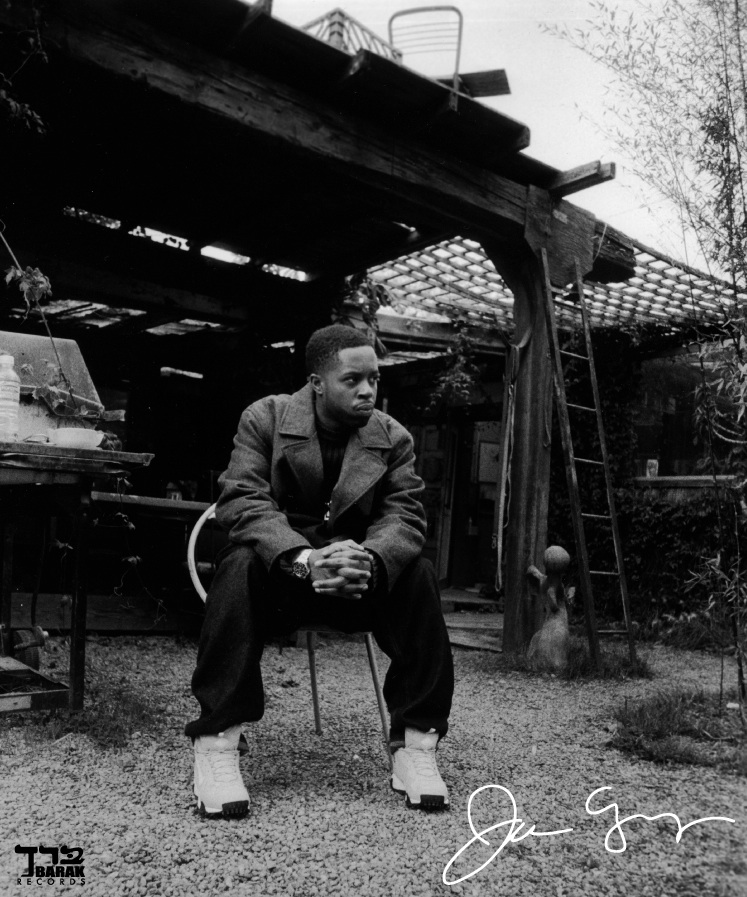
For eight weeks this spring, the past, present, and future of hip hop converged in a rehearsal room on the campus of Boston’s Berklee College of Music. There, nine students and their instructor looked to their predecessors to help them prepare to become professional musicians with the skills to pay the bills and get the props, as the title of Dilla’s latest posthumous release, Jay $tay Paid, implies.
So it makes dollars and sense that the third anniversary of his death found one of America’s most renown music schools forming the first-ever Dilla Ensemble course, a for-credit class where students learn about and build on the late producer’s legacy.

A core part of Berklee’s curriculum is Ensemble courses, where students learn, practice, and create music in a small group environment. While some ensembles are based on music genres, others are centered around the music of a particular artist (there are Bob Marley and Bob Dylan ensembles). “Even when I was a student — even before I was a student — there were students that were there before me that were talking about, ‘I wish there was a Dilla course,” Ellis insists.
When faculty at Berklee approached Ellis about teaching hip hop-based courses as part of its Ensemble department, he took it as an opportunity to pay it forward to both Dilla and his fellow Berklee-ites. Intent on using his background in music synthesis and the knowledge he’s acquired as an “active fan” of hip hop in general and Dilla’s music in particular, Ellis set out to teach a course that would give young students a chance to experience what he and others had missed out on — to study a musician whose work you appreciate. At the same time, Dilla’s music would act as a guide to how young musicians could develop the musical discipline necessary to create their own distinct sound.


Dane Orr, a saxophonist in the Ensemble, agrees. “He gets into a groove that no one else had really played before,” Orr says. “It was cool to listen to all the jazz samples and hear how he used them. It’s almost like you’re playing jazz in a way, but in a hip hop way. His music just kind of perfectly mixes them.” Observations like these touch on one of the main reasons Dilla was — is — so hip hop, and why his music makes a fine specimen for study: not only did he master the balance of making old sound new and new sound old, but he did so while paying homage to hip hop’s musical ancestors. Dilla paid dues, and now, even in the afterlife, he’s staying paid.
Looking back while thinking forward has always been an important aspect of music education, or any education for that matter, but Berklee has been slow to teach hip hop history, instead focusing on the study of the performance aspects of the genre. But as Ellis points out, today’s Berklee student is different from those of the past, and to keep up with the times, the school should start to accept and embrace the fact that hip hop is an integral part of American popular culture. “You can’t have a music school and not know what kind of music your students are listening to,” he quips. “These kids are growing up with hip hop their whole lives. They’re like, 18 years old. They’ve been living with Dilla their entire lives. I remember my life before Dilla. They can’t.” In the last decade, hip hop has become progressively more accessible and acceptable, and it’s that mass appeal that’s finally provoked academia to study the music and its culture.

His students are similarly concerned with making sure hip hop gets its just due. Selph hopes Berklee’s hip hop courses will “push the whole idea of hip hop being an art rather than [pushing] the negative side of hip hop,” while Orr believes classes like the Dilla Ensemble could help hip hop become “a little more sophisticated in the future,” and are necessary for musicians of any genre because “the more educated musicians are, the better the music is gonna be.” Music’s future isn’t so far ahead of themselves to forget about looking or giving back.
In a Q&A after the recital, Ms. Yancey, who was in town to take in the Ensemble’s performance, seemed pleased with what the class and recital meant for both her son’s legacy and the legacies the young music students were in the midst of making, saying, “I can hear your love coming through your instruments.” But these students and their instructor were simply doing their part to understand and enhance the sound that defines their generation, their lives, their cultures, and their music.
“We didn’t realize it was going to be such a big deal, so we weren’t really stressin' it. We were just kind of having fun with it, just trying to do our thing,” Orr recalls. Still, they weren’t too busy having fun to learn the most important lesson of all. Says Selph, “I would say the biggest thing [I learned] was how much of a genius J Dilla was.”
Published on Okayplayer.com
